


COMMUNITY TRAVEL STORIES
FOUNDER'S TRAVEL ADVENTURES
HELPFUL EXTRAS
A Zanzibar Negotiation at Gunpoint
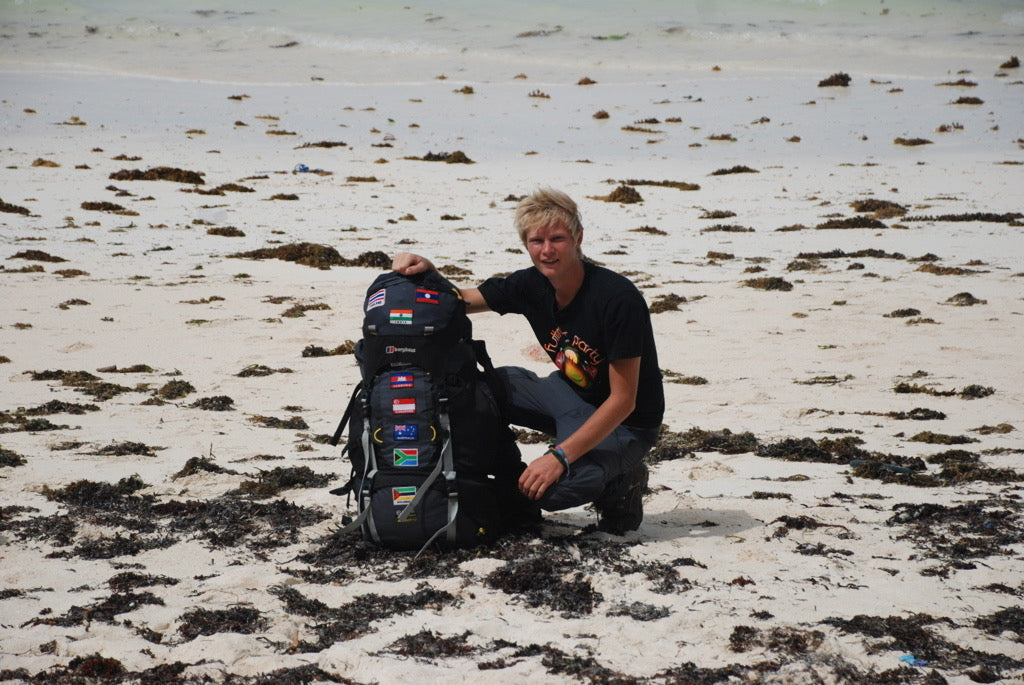

We were sitting in a dusty Zanzibar police outpost being offered a cold beer by the same officer who had just taken our passports.
Technically we weren’t under arrest.
We were simply being “detained”.
It was not how we expected our final part of our African adventure to unfold.

If my motorbike adventures hadn’t already taught me enough lessons by this point, I was practically becoming a master. I had fallen off in India, survived the mountains of North Vietnam, and navigated Cambodia by bike. By the time we hit Tanzania, I was a veteran of the two-wheeled debacle.
Zanzibar was meant to be the reward. We had been travelling overland through Africa for two months, starting in South Africa and slowly working our way toward Kenya. The island was our final stop and a few days of sun before the flight home.
Naturally, renting motorbikes seemed like the perfect way to see it. Motorbikes have a way of taking you to places you never planned to go, down roads that don’t appear on maps and into situations that certainly don’t appear in the guidebooks. The ones that lead you somewhere slightly uncertain, somewhere unseen.
What could possibly go wrong?

The Magazine Brochure
We rode with the sea breeze in our hair, slightly salty and humid, weaving through the scent of drying cloves and tropical palms.
The ocean was a violent, impossible turquoise. The kind of blue that looks over-saturated even before you put a filter on it. It looked less like water and more like a high-end cinematic travel ad. That sense of discovery is a drug. You peel off the tarmac and the world changes instantly; the path narrows, the smooth road giving way to a jagged spine of red dirt, slick mud, and exposed roots. Soon, you’re weaving through small villages where the air thickens with the scent of woodsmoke, and the locals pause their work to watch you with a look of mild, patient confusion. You look lost because you are, and in that moment, that’s exactly the point.
Everyone, thankfully, was friendly and welcoming.
One of our friends decided he wanted the “better” bike. He had grown up riding bikes and possessed that sublime twenty-something confidence where the ego is large and the sense of danger is non-existent. He was the expert among the group.

We were riding along a normal stretch of road when he accelerated ahead and disappeared around a bend.
A few seconds later we heard it.
The unmistakable metallic slide of a crash.
The Crash
We rounded the corner expecting the worst.
The bike was lying on its side at the edge of the road, one wheel slowly spinning. Our friend stood next to it, helmet still on, staring at the damage as if trying to calculate exactly how this had happened.
The road had suddenly gone quiet. The engine ticked softly as it cooled in the heat. A couple of locals had started to gather nearby, watching with the calm curiosity reserved for tourists doing something mildly foolish.

To this day he maintains there was sand or oil on the road.
Memory is a strange thing. Over time the explanation becomes the memory. For the sake of goodwill, we’ll go with the sand.
He was unharmed, but the bike was clearly not going anywhere.
While we were inspecting the damage, we heard another engine approaching.
Two police officers arrived on motorbikes and pulled up beside us.
They didn’t rush. They parked, stepped off their bikes, and quietly assessed the scene before speaking. Their rifles hung loosely over their shoulders. They weren’t pointing them at us, but they didn’t need to.
They were smiling, but the way they held them made it very clear who was in charge.
No one was going anywhere without their say-so.
One of the officers spoke briefly with the small crowd that had gathered, then turned back to us and gestured toward their motorbikes. It wasn’t phrased as an instruction so much as an expectation.
As he spoke, he shifted the rifle on his shoulder slightly, not pointing it at anyone, just adjusting the weight of it. The message landed all the same.
We were going to the police station. That much was no longer a discussion.
Our friend’s damaged bike would stay where it was. One officer climbed back onto his motorbike and motioned for our friend to sit behind him. The rest of us were told to ride our bikes and follow.
They positioned themselves tightly around us as we pulled away, one ahead, one directly on our shoulder. Close enough that the idea of turning off or riding away never really crossed our minds.

The Negotiation
At the station, they took our passports.
I have always been reluctant to hand over a passport abroad. Once it’s gone, you are effectively powerless, but it wasn’t presented as a negotiation. In fact, it wasn’t really an option.
They asked us to wait in a holding room.
The room was simple: iron bars, a single bed, and old concrete covered in sand and dust. They had moved in a few extra plastic chairs for us. A pistol sat casually on a nearby desk.
I remember looking at our passports in the officer’s hands and realising how strange it was that such a small object could suddenly make you feel completely powerless. Without it, we weren’t really going anywhere.
I wasn’t convinced they would actually use the weapons on us. We were tourists after all but in their world they were the ones in charge. Keeping friendly felt like the only sensible approach.
There was no hostility. The whole situation felt strangely transactional.
Then came the offer that broke my brain.
A cold beer.
It made absolutely no sense.
There we were, "detained" behind iron bars by men with rifles, being offered a chilled beverage in a sun-drenched room that felt more like a sleepy corner store than a police outpost. It is likely the only time in my life I will ever be offered "cell-service" while awaiting a diplomatic resolution. In any other context, it would have been the ultimate gesture of hospitality. Here, with a pistol sitting casually on a nearby desk and our passports in a drawer, it felt like a trap wrapped in a kindness. I looked at the condensation dripping off the bottle and wondered if drinking with your captor meant I’d ultimately developed Stockholm syndrome. It was a moment of pure, bewilderment.
Given the circumstances, it didn’t feel like the wisest choice.
In that hot, dusty cell, though, and with the tension hanging in the air, a cold beer would certainly have taken the edge off, especially as the officer simply shrugged and opened one of his own.

The Final Shilling
The explanation was that because of the accident we were not “legally” allowed to continue driving on the island without a specific local certification.
We tried to play the broke traveller card. In fairness it wasn’t entirely an act. We were nearing the end of two months on the road and our budgets were looking fairly thin.
They were sympathetic.
“I’m sure your family could help transfer some money,” one officer suggested helpfully.
Lucky for him, we had already decided he should graciously accept that burden.
He walked into town with one of the officers to find a cash machine while we waited in the holding room.
The moment the stack of Shillings hit the desk, the tension evaporated like mist in the morning sun. The "legal" hurdles that had seemed insurmountable five minutes ago simply vanished into the salty air.
Our passports were returned with a smile, the "paperwork" was finalised with a flourish, and we were suddenly no longer suspects. We were honoured guests. It turns out the "administration fee" was the ultimate lubricant for local bureaucracy.
Travel has a funny way of flipping the script. One minute you’re the protagonist in a glossy island dream; the next, you’re sitting on a cracked plastic chair in a dusty outpost, realising that “exploring the unseen” sometimes leads directly to a rifle, a receipt, and a very expensive story.
At least, it was expensive for our friend, who so graciously “volunteered” to foot the bill for the island’s administrative overhead.
Leaping Fox. Exploring the unseen.

About Author
-


British adventure photographer James Evans is driven by a passion for uncovering hidden beauty. His journey with Leaping Fox reflects this spirit, inviting others to explore their own unique perspectives and "Explore the Unseen." Learn more about the vision behind Leaping Fox and the stories that inspire it.
learn more